There is a town in central Poland called Aleksandrów Łódzki, just northwest of Łódź, with a population of about twenty thousand and a remarkably high number of hosiery factories per capita. I can count at least half a dozen in the same small town with no effort: Bilarte, Tex-Sta, Karo, Nordhorn, Lady Tina, and the brand I want to talk about, Lady Kama. This is what an industrial cluster looks like at the small end. Castiglione delle Stiviere has Golden Lady. Nottingham has Pretty Polly. Aleksandrów Łódzki has a long list of family-owned mills that do roughly the same thing for a regional market most American hosiery shoppers will never touch.
Lady Kama itself was founded in 1990, the year after the Berlin Wall came down, by the Miszczak family. The current legal entity is Lady Kama Anna Miszczak sp. j., and the operation employs around two hundred and fifty people on Brużyca Street. The catalogue runs to about a hundred items: tights, stockings, leggings, knee-highs, and socks, for women and girls. So far this could be a smaller, less famous Gatta.
What sets Lady Kama apart is partly the technical input. The company uses yarns from Nilit, Aquafil, Stilon, Invista, and Asahi Kasei. For anyone who has not spent time on the supply side, those are the serious names. Nilit and Aquafil are the Italian giants of nylon. Invista owns Lycra. Asahi Kasei makes Roica, the Japanese elastane in some of the better stay-up stockings on the market. A small Polish family business sourcing from this list is not cutting corners on the fiber. The corners, if they are cut anywhere, are cut on marketing.
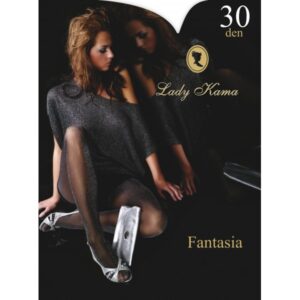
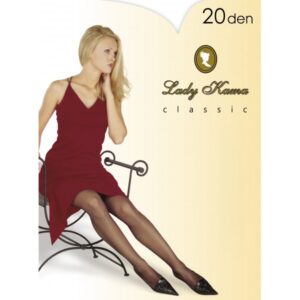
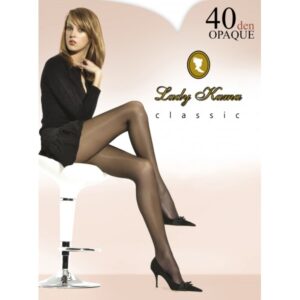
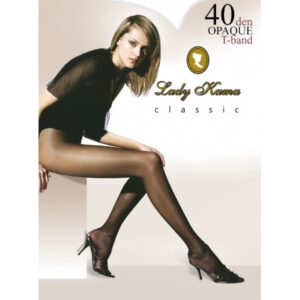
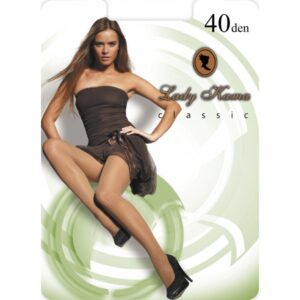
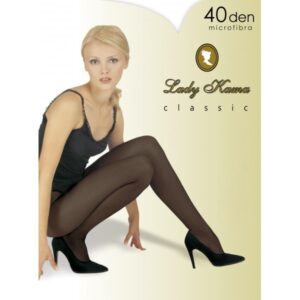
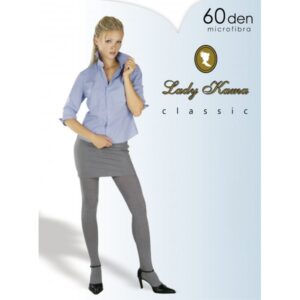
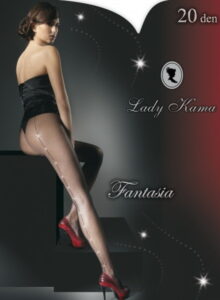
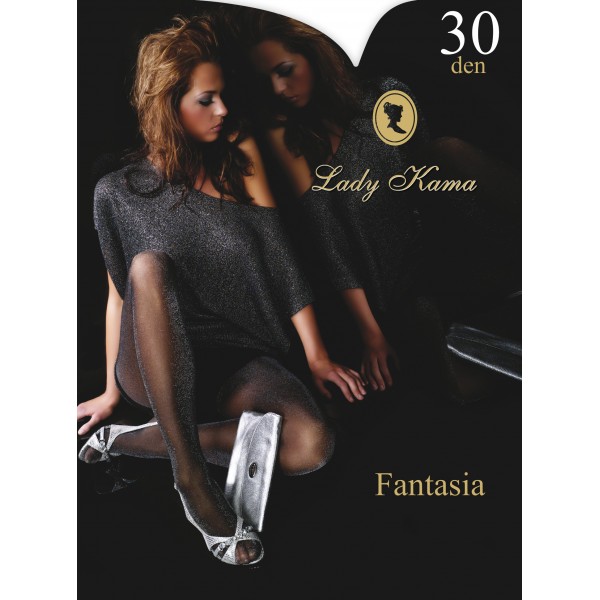
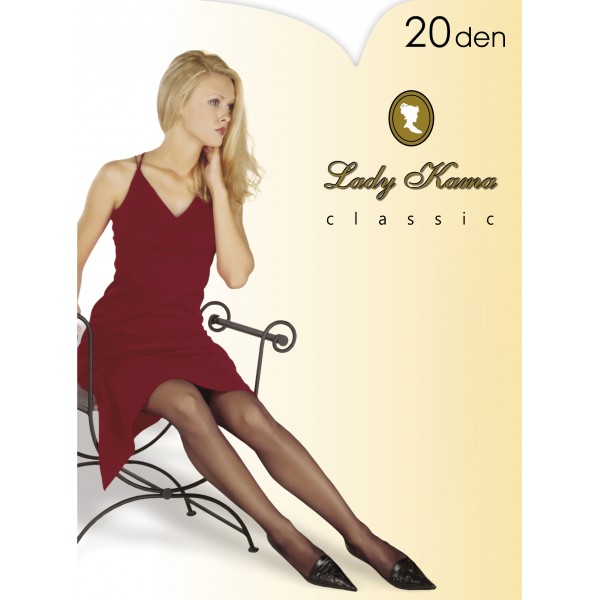
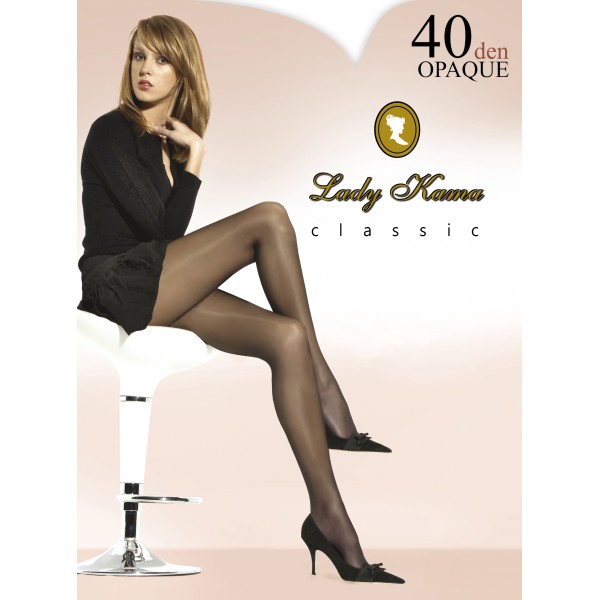
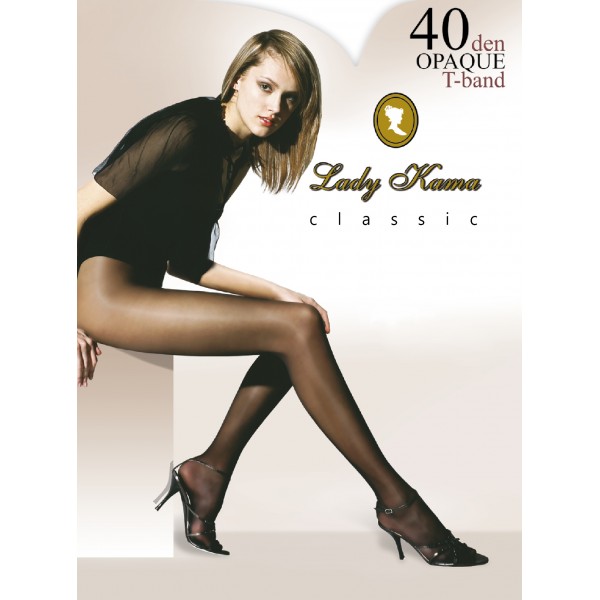
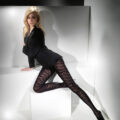
That brings us to the packaging. Lady Kama’s product photography belongs to a specific moment, somewhere between 2005 and 2012, when European hosiery catalogues all looked the same: pastel hearts on the backdrop, a blonde model in a tilted pose, the denier number in big numerals in the corner, the brand name in italic script next to a small gold medallion. It is not contemporary. It is not pretending to be. The packaging is unironically what it is, which is a hosiery box you might have seen on the shelf at a small shop in Wrocław or Brno fifteen years ago.
The product range covers everything from an eight-denier summer sheer to a two-hundred-denier acrylic legging that I assume exists because Polish winters are not warm. There is an Anabell line for the heavy leggings, a Classic line for the everyday sheers, a Fantasia line for patterned tights, and various sub-categories with names like T-Band and R-Band that refer to different waistband constructions. Not every style has a woman’s name attached. Most do not. After a few brands in a row that try to romance you with proper nouns, Lady Kama’s approach feels honest. You buy the eight-denier summer pair because it is eight denier and it is summer. The box does not need to tell you a story.

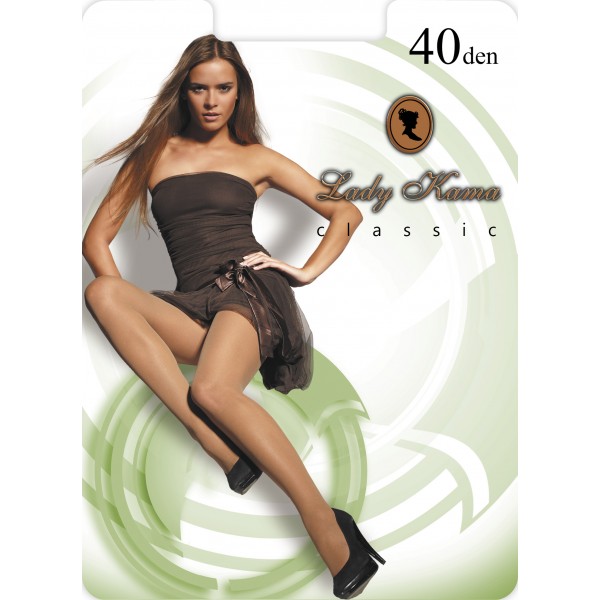
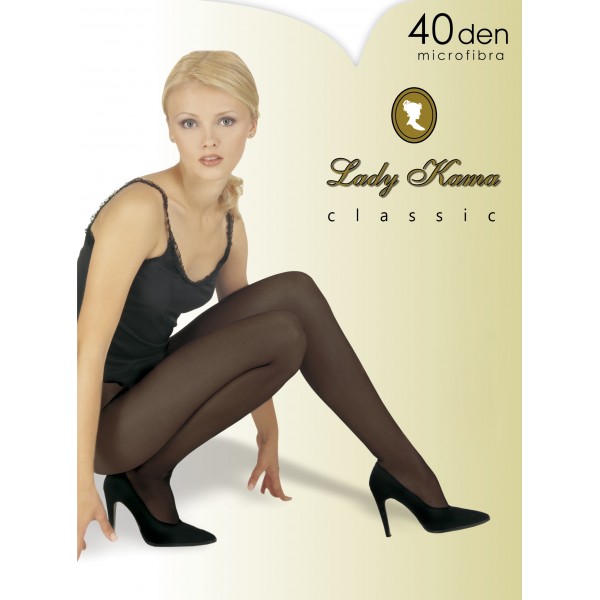
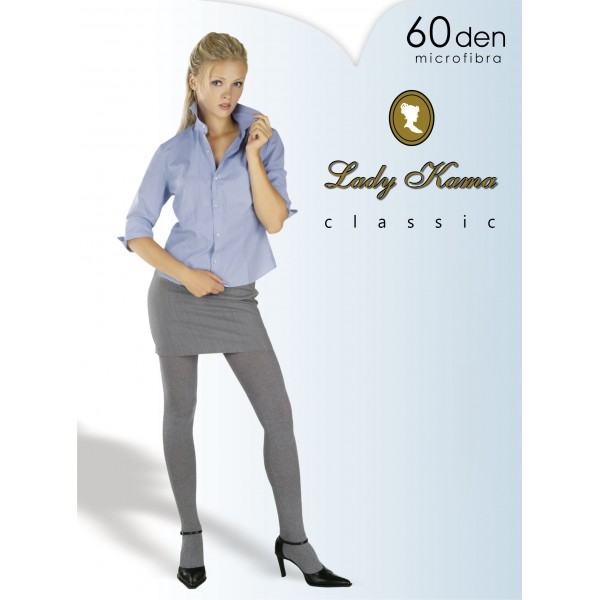
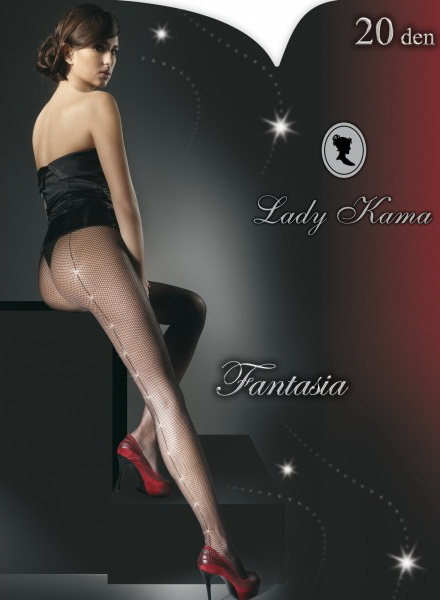
You will not find Lady Kama on American shelves. A few pairs surface on Amazon, sold by European resellers, and a handful of specialty hosiery shops with European inventories carry the brand. A single pair runs ten to fifteen dollars, which is roughly twice the local Polish price. Fine for one experiment, not for ongoing supply.
What Lady Kama really is, in the end, is a useful reminder. Hosiery is one of the few apparel categories where serious manufacturing is concentrated in places nobody photographs for magazines. Aleksandrów Łódzki is not going to show up in any fashion editor’s vacation roundup. The factories there make the kind of tights women in Poland and eastern Germany and the Baltics put on in the morning without thinking about it, the way American women used to put on No Nonsense. We have no American equivalent of that ecosystem anymore, which says something about how we lost a category most of us still need.
If you ever come across a Lady Kama box in a shop in Berlin or Vienna or Warsaw, buy the eight-denier sheer in summer or a Classic twenty in fall. Take it home. Notice that the box is not a story. The product is the story, and the story is fine.




Leave a Reply